Know about Digital Camera
RISINGBD DESK || risingbd.com
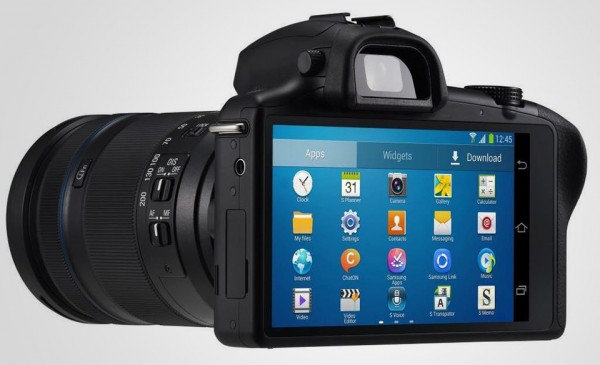
Digital Camera
DHAKA, Aug 28
A digital camera (or digicam) is a camera that takes video or still photographs by recording images on an electronic image sensor. Most cameras sold today are digital and digital cameras are incorporated into many devices ranging from PDAs and mobile phones (called camera phones) to vehicles.
Digital and film cameras share an optical system, typically using a lens with a variable diaphragm to focus light onto an image pickup device. The diaphragm and shutter admit the correct amount of light to the imager, just as with film but the image pickup device is electronic rather than chemical. However, unlike film cameras, digital cameras can display images on a screen immediately after being recorded, and store and delete images from memory. Many digital cameras can also record moving video with sound. Some digital cameras can crop and stitch pictures and performs other elementary image editing.
Steven Sasson as an engineer at Eastman Kodak invented and built the first electronic camera using a charge-coupled device image sensor in 1975. Earlier ones used a camera tube; later ones digitized the signal. Early uses were mainly military and scientific; followed by medical and news applications. In the mid to late 1990s digital cameras became common among consumers. By the mid-2000s digital cameras had largely replaced film cameras and by the beginning of the 2010s smartphones had an integrated digital camera.
Digital cameras come in a wide range of sizes, prices and capabilities. Specialized cameras including multispectral imaging equipment and astrographs are used in scientific, military, medical and other special purposes for which digital photography was invented.
Compact digital cameras
Compact cameras are intended to be portable and are particularly suitable for casual "snapshot".
Most, apart from ruggedized or water-resistant models, incorporate a retractable lens assembly that provides optical zoom. The auto actuating lens cover protects the lens from elements.
Compactcameras are usually designed to be easy to use, sacrificing advanced features and picture quality for compactness and simplicity Template:Original research-inline; images can usually only be stored using lossy compression (JPEG). Most have a built-in flash usually of low power, sufficient for nearby subjects. Live preview is almost always used to frame the photo. Most have limited motion picture capability. Compacts often have macro capability and zoom lenses but the zoom range is usually less than for bridge and DSLR cameras. Generally a contrast-detect autofocus system, using the image data from the live preview feed of the main imager, focuses the lens.
Bridge cameras
Bridge are higher-end digital cameras that physically resemble DSLRs and share with them some advanced features, but share with compacts the use of a fixed lens and a small sensor. Like compacts, most use live preview to frame the image. Their autofocus uses the same contrast-detect mechanism, but many bridge cameras have a manual focus mode, in some cases using a separate focus ring, for greater control.
Due to the combination of big physical size but a small sensor, many of these cameras have a large zoom range and a wide aperture. This type of cameras generally includes an image stabilization system to enable longer handheld exposures.
Bridge cameras are usually fitted with fixed (non-interchangeable) lenses. Some have a lens thread to attach accessory wide-angle or telephoto converters), the scene is composed by viewing the display or the electronic viewfinder (EVF). Most have a longer shutter lag than a DSLR. Many of these cameras can store images in a raw image format, or processed and JPEG compressed, or both. The majority have a built-in flash.
In bright sun, the quality difference between a good compact camera and a digital SLR is minimal but bridge cameras are more portable, cost less and have similar zoom ability to DSLR. Thus a bridge camera may better suit outdoor daytime activities, except when seeking professional-quality photos.
A 3D photo mode was introduced in 2011, whereby the camera automatically takes a second image from a slightly different perspective and provides a standard MPO file for stereo display.
Mirror less interchangeable-lens camera
In late 2008, a new type of camera emerged, which uses larger sensors and offers lens interchangeability. These are simpler and more compact than DSLRs as they do not have the lens reflex system. Some use Micro Four Thirds and some use APS-C such as the Sony NEX series, Pentax K-01, and Canon EOS M.
Digital single lens reflex cameras
Digital single-lens reflex cameras (DSLR) uses mirror to direct light from the lens through a separate optical viewfinder. The mirror is moved out of the way to direct the image to the sensor at the time of exposure.
Autofocus is accomplished using sensors in the mirror box. Some DSLRs have a "live view" mode that allows framing using the screen with image from the sensor.
These cameras have much larger sensors than the other types, typically 18 mm to 36 mm on the diagonal (crop factor 2, 1.6, or 1). This gives them superior low-light performance, less depth of field at a given aperture, and a larger size.
They make use of interchangeable lenses to allow use of different lenses. Some lenses are made for digital SLR use only.
Digital rangefinders
A rangefinder is a user-operated optical mechanism to measure subject distance. Most digital cameras measure subject distance automatically using electro-optical techniques, but it is not customary to say that they have a rangefinder.
Line-scan camera systems
A line-scan camera has a single row of pixel sensors, instead of a matrix of them. The frames are continuously fed to a computer that joins them to each other and makes an image. This makes possible sharp pictures of objects that have passed the camera at high speed. Sporting races commonly use this kind of camera to make photo finishes, i.e. determine the winner when multiple competitors cross the finishing line at nearly the same time. These cameras can also be used as industrial instruments for analyzing fast processes.
Integration
Many devices have a built-in digital camera. For example, mobile phones, PDAs and laptop computers. Built-in cameras generally store the images in JPEG file format.
Mobile phones incorporating digital cameras were introduced in Japan in 2001 by J-Phone. In 2003 camera phones outsold stand-alone digital cameras, and in 2006 they outsold film and digital stand-alone cameras. Five billion camera phones were sold in five years, and by 2007 more than half of the installed base of all mobile phones was camera phones. Sales of separate cameras peaked in 2008.
Waterproof
Waterproof digital cameras include those that can be totally submerged for underwater photography and those designed to operate in wet conditions on land. Many waterproof digital cameras are shockproof and resistant to low temperatures. Waterproof housings are available to protect non-waterproof cameras in wet or submerged conditions.
Recent trends
The sales of traditional digital cameras have declined due to the increasing use of smartphones for casual photography, which also enable easier manipulation and sharing of photos through the use of apps and web-based services. Traditional camera manufacturers have also recently had success with "bridge cameras", a class of DSLR-like cameras with a compact form, which feature functionality that most smartphone cameras lack, such as optical zoom capabilities and other advanced features.DSLRs have also lost ground to Mirror less interchangeable-lens camera (MILC)s offering the same sensor size in a smaller camera. A few expensive ones use a full frame sensor as DSLR professional cameras.
In response to the convenience and flexibility of smartphone cameras, some manufacturers began to introduce "smart" digital cameras that combine features and traits from traditional cameras with those of a smartphone. In 2012, Nikon and Samsung released the Coolpix S800c and Galaxy Camera, the first two digital cameras to run the Android operating system. As they use a software platform similar to that of many smartphones, this enables the cameras to offer the same level of integration with online services (such as e-mail and social networks) as smartphones, and also allow the use of other Android-compatible software as well.
In an inversion, some phone makers have also introduced smartphones with cameras designed to be similar to those used by traditional digital cameras. Nokia released the 808 PureView and Lumia 1020 in 2012 and 2013; the two devices respectively run the Symbian and Windows Phone operating systems, and both include a 41 megapixel camera with 6x optical zoom (along with a camera grip attachment for the latter). Similarly, Samsung also introduced the Galaxy S4 Zoom, a device with 16 megapixel camera and 10x optical zoom, combining traits from the Galaxy S4with the Galaxy Camera.
Transferring photos
Many digital cameras can connect directly to a computer to transfer data:
Early cameras used the PC serial port. USB is now the most widely used method (most cameras are viewable as USB mass storage), though some have a FireWire port. Some cameras use USB PTP mode for connection instead of USB MSC; some offer both modes.
Other cameras use wireless connections, via Bluetooth or IEEE 802.11 Wi-Fi, such as the Kodak EasyShare One.
Cameraphones and some high-end stand-alone digital cameras also use cellular networks to connect for sharing images. The most common standard on cellular networks is the MMS Multimedia Messaging Service, commonly called "picture messaging". The second method with smartphones is to send a picture as an email attachment. Many cameraphones do not support email, so this is less common.
A common alternative is the use of a card reader which may be capable of reading several types of storage media, as well as high speed transfer of data to the computer. Use of a card reader also avoids draining the camera battery during the download process. An external card reader allows convenient direct access to the images on a collection of storage media. But if only one storage card is in use, moving it back and forth between the camera and the reader can be inconvenient. Many computers have a card reader built in, at least for SD cards.
Printing photos
Many modern cameras support the PictBridge standard, which allows them to send data directly to a PictBridge-capable computer printer without the need for a computer.
Wireless connectivity can also provide for printing photos without a cable connection.
Polaroid has introduced a printer integrated into its digital camera which creates a small, printed copy of a photo. This is reminiscent of the original instant camera, popularized by Polaroid in 1975.
Displaying photos
Many digital cameras include a video output port. Usually sVideo, it sends a standard-definition video signal to a television, allowing the user to show one picture at a time. Buttons or menus on the camera allow the user to select the photo, advance from one to another, or automatically send a "slide show" to the TV.
HDMI has been adopted by many high-end digital camera makers, to show photos in their high-resolution quality on an HDTV.
In January 2008, Silicon Image announced a new technology for sending video from mobile devices to a television in digital form. MHL sends pictures as a video stream, up to 1080p resolution, and is compatible with HDMI.
Some DVD recorders and television sets can read memory cards used in cameras; alternatively several types of flash card readers have TV output capability.
Image Data Storage
Many camera phones and most stand-alone digital cameras use removable flash memory memory card to store image data. The majority of cards for separate cameras are SD format; some are CompactFlash in addition to other types. In January 2012, a faster XQD card format was announced.
A few cameras use some other form of removable storage such as Microdrives (very small hard disk drives), CD single (185 MB), and 3.5" floppy disks. Other unusual formats include:
Onboard flash memory — Cheap cameras and cameras secondary to the device`s main use (such as a camera phone)
PC Card hard drives — early professional cameras (discontinued)
Thermal printer — known only in one model of camera that printed images immediately rather than storing
Most manufacturers of digital cameras do not provide drivers and software to allow their cameras to work with Linux or other free software. Still, many cameras use the standard USB storage protocol, and are thus easily usable. Other cameras are supported by the gPhoto project.
File formats
The Joint Photography Experts Group standard (JPEG) is the most common file format for storing image data. Other file types include Tagged Image File Format (TIFF) and various Raw image formats.
Many cameras, especially high-end ones, support a raw image format. A raw image is the unprocessed set of pixel data directly from the camera`s sensor, often saved in a proprietary format.Adobe Systems has released the DNG format, a royalty-free raw image format used by at least 10 camera manufacturers.
Raw files initially had to be processed in specialized image editing programs, but over time many mainstream editing programs, such as Google`s Picasa, have added support for raw images. Rendering to standard images from raw sensor data allows more flexibility in making major adjustments without losing image quality or retaking the picture.
Formats for movies are AVI, DV, MPEG, MOV (often containing motion JPEG), WMV, and ASF (basically the same as WMV). Recent formats include MP4, which is based on the QuickTime format and uses newer compression algorithms to allow longer recording times in the same space.
Other formats that are used in cameras but not for pictures are the Design Rule for Camera Format (DCF), an ISO specification for the camera`s internal file structure and naming, and Digital Print Order Format (DPOF), which dictates what order images are to be printed in and how many copies.
Most cameras include Exif data that provides metadata about the picture. Exif data may include aperture, exposure time, focal length, date and time taken, and location.
Conversion of film cameras to digital
When digital cameras became common, a question many photographers asked was whether their film cameras could be converted to digital. The answer was yes and no. For the majority of 35 mm film cameras the answer is no, the reworking and cost would be too great, especially as lenses have been evolving as well as cameras. For most a conversion to digital, to give enough space for the electronics and allow a liquid crystal display to preview, would require removing the back of the camera and replacing it with a custom built digital unit.
Many early professional SLR cameras, such as the Kodak DCS series, were developed from 35 mm film cameras. The technology of the time, however, meant that rather than being digital "backs" the bodies of these cameras were mounted on large, bulky digital units, often bigger than the camera portion itself. These were factory built cameras, however, not aftermarket conversions.
A notable exception is the Nikon E2, followed by Nikon E3, using additional optics to convert the 35mm format to a 2/3 CCD-sensor.
A few 35 mm cameras have had digital camera backs made by their manufacturer, Leica being a notable example. Medium format and large formatcameras (those using film stock greater than 35 mm), have a low unit production, and typical digital backs for them cost over $10,000. These cameras also tend to be highly modular, with handgrips, film backs, winders, and lenses available separately to fit various needs.
The very large sensor these backs use leads to enormous image sizes. For example Phase One`s P45 39 MP image back creates a single TIFF image of size up to 224.6 MB, and even greater pixel counts are available. Medium format digitals such as this are geared more towards studio and portrait photography than their smaller DSLR counterparts; the ISO speed in particular tends to have a maximum of 400, versus 6400 for some DSLR cameras. (Canon EOS-1D Mark IV and Nikon D3S have ISO 12800 plus Hi-3 ISO 102400 with the Canon EOS-1Dx`s ISO of 204800).
Refference: Internet
Risingbd/MD. Shazaman
risingbd.com