Shuvo Noboborsho 1421
Augustin Sujan || risingbd.com
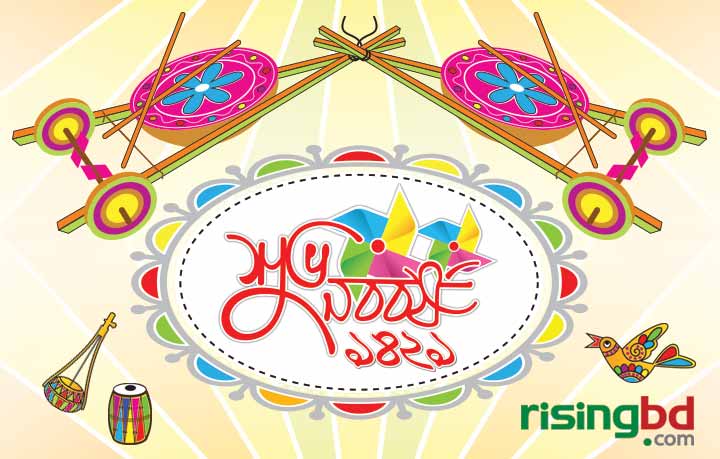
Shuvo Noborsho 1421
Augustin Sujan, DHAKA, Apr 14: The nation is celebrating Pahela Baishak, the Bangla New Year 1421 today with pomp and colour lacing traditional gaiety, fairs, open-air concerts and rallies.
Pahela Baishakh is the most important part of Bengali tradition. Every year the country absolutely comes to life as people from all walks of life flock to the streets to enjoy the merriment of the Pahela Baishakh festival.
Pahela Baishakh is celebrated in Bangladesh, west Bengal and Tripura. Moreover Bengali Expatriates in UK, USA and other parts of the world celebrate the day with traditional gaiety.
People exchange New Year greeting, ‘Shuvo Noboborsho’ with each other.
The Pahela Baishakh festivities start with the consumption of a traditional breakfast. The menu typically include Panta Ilish (boiled rice soaked in water with Hilsa fish). Besides, gur (sugar), cheera, yogurt and deferent types of sweets are also kept in the breakfast menu.
Baishakhi Mela (fair) is another attraction of Bangla New Year. People dressed with traditional cloths enjoy the festivities of the fairs. The clothing is usually quite festive and in this way reflects the joyousness of the event. The fairs always take place at a location that has been decided long before hand. Usually the shade of a banyan tree is a popular place to hold the festivities though the fresh air found along a riverfront is also ideal.
Here is where you will find stall upon stall offering beautiful clay dolls or plastic toys. Children nag their parents for these low-cost items while puppet shows educate and entertain and clowns vie for the public’s attention.
In the bigger city centers Pahela Baishakh has become a most valued tradition. The Ramna Batamool function in Dhaka is widely known as being the most famous and largest of all these events. The various stalls and fairs are kept open for an entire week and some 100 female artists dress in golden silk saris with ornate red borders in order to take their place under the banyan tree from where they can sing a variety of beautiful songs to the public.
The celebrations are started at the break of dawn with a rendition of Rabindranath Tagore’s song “Esho he Baishakh” by Chhayanat under the banyan tree at Ramna.
An integral part of the festivities is the Mongol Shobhajatra, a traditional colourful procession organised by the students of the Faculty of Fine Arts (Charukala) of Dhaka University. The procession has a different theme relevant to the country’s culture and politics every year. Different cultural organizations and bands also perform on this occasion and fairs celebrating Bangla culture are organized throughout the country.
Other traditional events held to celebrate Poila Boishakh include bull racing in Munshiganj, wrestling in Chittagong, boat racing, cockfights, pigeon racing.
Amazingly enough, such a merry occasion usually ends somewhat abruptly. With tried and tested exactness, a small speck of dark cloud on the horizon in the early morning soon sweeps over the country and ushers in a massive storm. Howling winds sweep away whatever is left of the stalls and dust limits visibility.
Before long, rain starts to pour releasing the heat of the day and bringing a spell of relief. Unfortunately this storm can sometimes be a bit severe and may cause loss of life and extensive damage to property. However this is considered the perfect end to the day’s celebrations and the entire event is greatly anticipated by the people of the land.
risingbd family whole heartedly wish a very ‘Shuvo Noboborsho’ to its readers and well wishers.
risingbd/Augustin Sujan
risingbd.com