Kazi Nazrul, an indomitable warrior for freedom
Aminul || risingbd.com
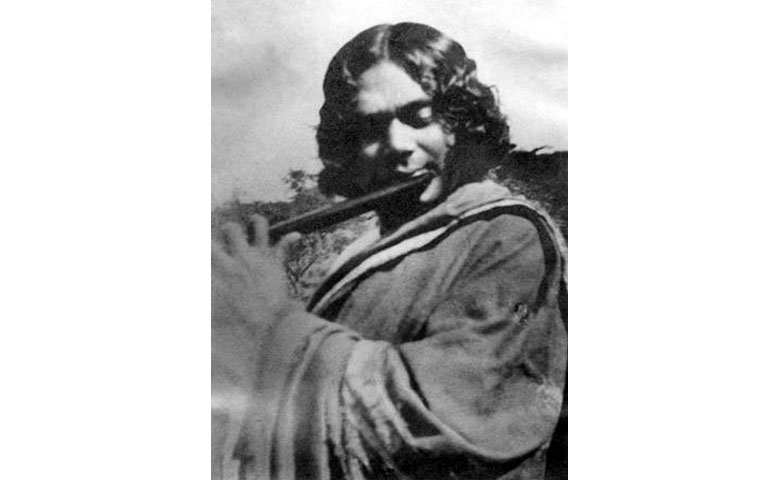
Kazi Nazrul Islam
Aminul Islam: Kazi Nazrul Islam was a Bidrohi or revolutionary poet who sided with Swadeshi or the non-cooperation movement for Indian independence from Great Britain.
His works let him to become the national poet of Bangladesh -- Kazi Nazrul Islam, whose writings inspired the freedom struggle of India in 1947 and the freedom fighters of Bangladesh in 1971.
Kazi Nazrul was mainly a Bengali Muslim musician, poet and novelist who used his poetry to inspire Indians to rebel against British colonialism. For this he earned the title `Bidrohi Kobi (the Rebel Poet)`.
His several pieces of literature banned by the British colonial government in an attempt to suppress the rebellious movements his compositions inspired.
On the 11th of Jaistha , the second month in the Bangla calendar, the indomitable spirit was born. The rebel poet composed poems and songs that still serve as a perennial source of inspiration for people fighting for justice.
He was a poet, lyricist, musician, revolutionary and philosopher. The nation got inspirations from Nazrul`s poems and songs during the great Liberation War and all democratic movements and struggles.
There are 2,400 of his songs, and together, they are known as Nazrul-Geeti or Nazrul Sangit. He composed the songs, which he liked to tune himself.
Considering his impressive talent, Rabindranath Tagore dubbed him as Saraswati`s bor-putra (the gifted son of the Goddess of learning).
President Abdul Hamid and Prime Minister Sheikh Hasina issued separate messages paying tributes to the memory of the national poet on the occasion of his 116th birth anniversary.
Sheikh Hasina will inaugurate this year`s main programme of Nazrul Jatyanti in Comilla town hall at 4:30pm under the theme "Nazrul in Comilla". Cultural Affairs Minister Asaduzzaman Noor will chair the programme while Professor Shantunu Kaysar will deliver Nazrul memorial speech.
On November 23, 1922, one journalist (Nazrul) was arrested from Comilla for his writing in a biweekly magazine called Dhumketu, which had shaken the core of the British rulers in the then Indian subcontinent.
Alongside the government, various organisations has also chalked out elaborate programmes to observe Kazi Nazrul Islam`s birth anniversary in a befitting manner.
Early Life
Nazrul was born on May 25, 1899, to Kazi Fakir Ahmed and Zahida Khatun, a poor couple from the village of Churulia in present-day West Bengal, India.
His father passed away in 1908, placing his family in a desperate situation. After finishing his Islamic primary school education, Nazrul worked in the mosque as a muezzin (one who calls Muslims to prayer).
While in school, Nazrul learned about literature and theater, and after serving in the Indian army, went on to work as a journalist in Calcutta.
`Bidrohi`
In 1921, Nazrul published his breakthrough poem called "Bidrohi," or "The Rebel," which immediately placed him in the public`s eye. Not only was the style of this work revolutionary in that it was abnormally bellicose, but it also challenged the tyrannical position that the British.
Played in Indian politics, and the oppressive nature of the upperclass over the lowerclass in society. In a time of rebellion and political unrest, Nazrul`s poetry played a crucial role in uniting the oppressed and providing them with an intense sense of nationalism.
Other Works
Nazrul joined the "Swadeshi" (self-rule) movement, led by Subhas Chandra Bose, and many other anticolonial movements, as well as boycotts of British goods. Along with his participation in the struggle against the British government, Nazrul composed many songs for participants to sing as they marched.
In 1922, Nazrul established his own magazine called "Dhumketu," or "The Comet," which featured anticolonial poems that wrestled with government oppression and independence. As a result of his rebellious nature and growing popularity, the British raided the magazine, arrested Nazrul and jailed him until late in 1923.
Following his time in jail, Nazrul participated in the publication of many other magazines, penning multiple songs, poems and political essays that argued against the partition of British India into two different states (Islamic Pakistan and Hindu India).
Instead, he had he hoped that independence and religious tolerance could have been achieved. As a Muslim, Kazi Nazrul Islam authored the largest collection of Hindu devotional songs, a strong testament to his belief in harmony between Muslims and Hindus.
Later Life
In 1924, Nazrul married Pramila Devi, a Hindu woman, sparking controversy because of their different religions. However, their marriage was just another indication that Nazrul firmly believed that the two groups were capable of unity and coexistence.
While conducting a children`s radio show on All India Radio on July 10, 1942, Kazi Nazrul suddenly lost his ability to speak, which was later attributed to mental instability.
Consequentially, he was admitted to a mental hospital, where he stayed for several months. Despite treatments from doctors and support from Pramila, his health continued to deteriorate.
In 1953 he was diagnosed by a Viennese doctor as having Pick`s disease, a rare and incurable neurodegenerative illness. His wife`s health also suffered, and she died in 1962.
Ten years later Nazrul moved to Bangladesh, where he was given the honor of being made the new country`s national poet. On August 29, 1976, Kazi Nazrul Islam died.
Following his request in one of his most famous songs to "bury me beside a mosque," he was laid to rest next to the Dhaka University Mosque.
risingbd/May 25, 2015/Aminul
risingbd.com