US antimissile system goes live in South Korea
3 || risingbd.com
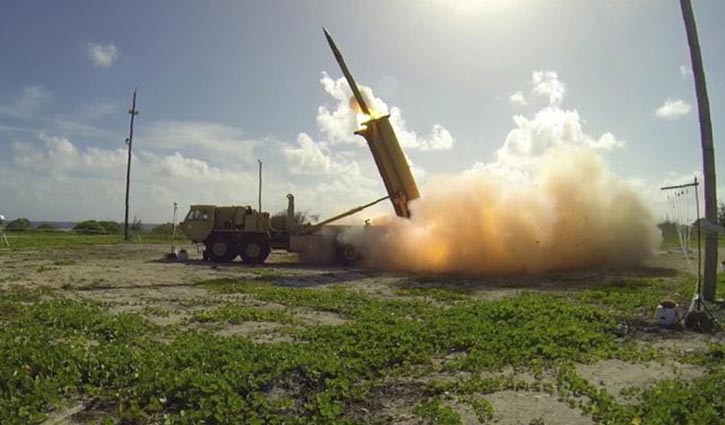
International Desk: An American missile-defense system deployed to counter growing threats from North Korea has gone into operation in South Korea, officials said on Tuesday.
The installation of the Terminal High Altitude Area Defense battery has roiled the South Korean presidential campaign, partly over questions of who will pay for it, and drawn objections from China, which said the deployment undermined its own missile defense capabilities.
The United States and South Korea began installing the radar and other key components of the system, known as Thaad, last week at an abandoned golf course in Seongju, 135 miles southeast of Seoul, after reaching an agreement to deploy it last July.
The system “is operational and has the ability to intercept North Korean missiles” and defend South Korea, said Col. Robert Manning III, a spokesman with the United States military in Seoul. His statement was echoed by the South Korean Defense Ministry, whose representative, Moon Sang-gyun, said the battery “has acquired an initial capability to deal with North Korea’s nuclear and missile threat.”
The announcement came as a controversy continued to rage over the cost of the Thaad system.
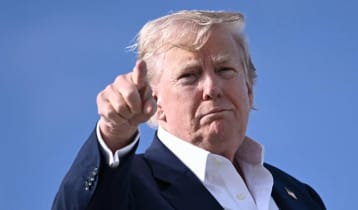
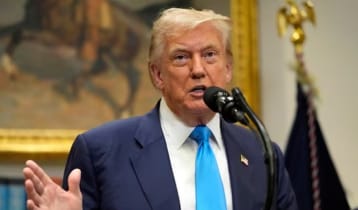
President Trump caused alarm in South Korea on Thursday when he told Reuters that he wanted Seoul to pay for the Thaad system, whose cost he estimated at $1 billion. South Korea has repeatedly told its people that the Americans had agreed to pay for the system and its operation and maintenance, with Seoul providing land and the support infrastructure.
On Sunday, the White House national security adviser, Lt. Gen. H. R. McMaster, called his South Korean counterpart, Kim Kwan-jin. Mr. Kim’s office later said that the two “reconfirmed what has already been agreed” about the system’s costs.
But the confusion was far from over.
General McMaster later told Fox News that the United States would stick to its word “until any renegotiation.”
“The last thing I would ever do is contradict the president of the United States,” he told Fox News. “What the president has asked us to do is to look across all of our alliances and to have appropriate burden-sharing, responsibility-sharing. We’re looking at that with our great ally South Korea; we’re looking at that with NATO.”
Such comments led many South Koreans to suspect that the Trump administration might attempt to renegotiate the Thaad deal or demand that South Korea increase its annual contribution, estimated at $820 million last year, to help pay for maintaining American troops in the country.
On Tuesday, South Korea’s main opposition party, the Democrats, called the government’s decision to accept the Thaad deployment “a total failure of diplomacy.”
The party’s presidential candidate, Moon Jae-in, is leading polls by a large margin ahead of the May 9 presidential election to choose the successor of the recently ousted President Park Geun-hye. Ms. Park agreed to the Thaad deployment before she was impeached for corruption in December. She was formally removed from office in March.
Agencies
risingbd/Dhaka/May 2, 2017/Shahed/Nasim
risingbd.com