Historic month of language movement begins
Aminul || risingbd.com
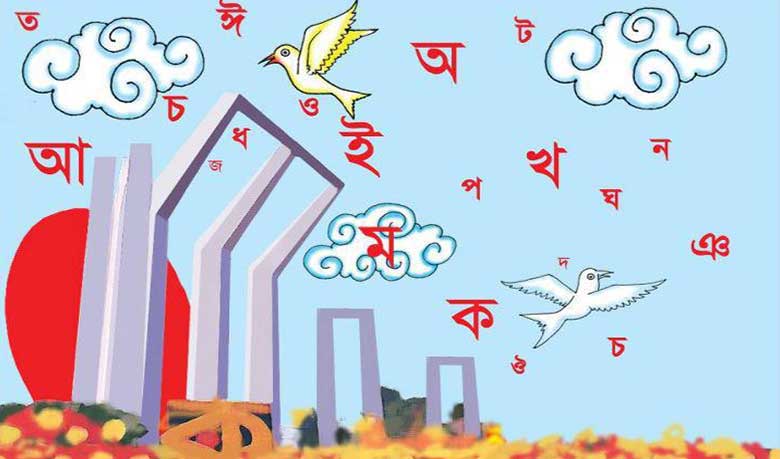
Aminul Islam: In this historic month in 1952, language movement had gotten momentum. Bengali students in East Pakistan (now Bangladesh) rose up and protested against the Pakistani government for declaring Urdu as the sole state language.
Majority of the Pakistani citizens (as of 1952), about 54% of the citizens, were Bengali. In the protest several students died for defending the Bengali language for themselves and for the future generations.
After the partition of India in 1947 and the establishment of the dominion of Pakistan, East Pakistan was formed made up 44 million of the newly formed Bengali-speaking people out of Pakistan`s 69 million people.
Pakistan`s government, civil services, and military, however, were dominated by West Pakistanis. In 1947, a key resolution at a national education summit in Karachi advocated Urdu as the sole state language, and its exclusive use in the media and in schools.
Opposition and protests immediately arose. Students from Dhaka rallied under the leadership of Abul Kashem, the secretary of Tamaddun Majlish, a Bengali Islamic cultural organisation. The meeting stipulated Bengali as an official language of Pakistan and as a medium of education in East Pakistan.
However, the Pakistan Public Service Commission removed Bengali from the list of approved subjects, as well as from currency notes and stamps. The central education minister Fazlur Rahman made extensive preparations to make Urdu the only state language of Pakistan.
Public outrage spread, and a large number of Bengali students met on the University of Dhaka campus on 8 December 1947 to formally demand that Bengali be made an official language. To promote their cause, Bengali students organised processions and rallies in Dhaka.
Finally, on February 21, 1952, at around 9:00 o`clock in the morning, students began gathering on the University of Dhaka premises in defiance of Section 144. The university vice-chancellor and other officials were present as armed police surrounded the campus.
By a quarter past eleven, students gathered at the university gate and attempted to break the police line. Police fired tear gas shells towards the gate to warn the students. A section of students ran into the Dhaka Medical College while others rallied towards the university premises cordoned by the police.
The vice-chancellor asked police to stop firing and ordered the students to leave the area. However, the police arrested several students for violating section 144 as they attempted to leave. Enraged by the arrests, the students met around the East Bengal Legislative Assembly and blocked the legislators` way, asking them to present their insistence at the assembly.
When a group of students sought to storm into the building, police opened fire and killed a number of students, including Abdus Salam, Rafiq Uddin Ahmed, Abul Barkat and Abdul Jabbar. As the news of the killings spread, disorder erupted across the city. Shops, offices and public transport were shut down and a general strike began.
At the assembly, six legislators including Manoranjan Dhar, Boshontokumar Das, Shamsuddin Ahmed and Dhirendranath Datta requested that chief minister Nurul Amin visit wounded students in hospital and that the assembly be adjourned as a sign of mourning.
This motion was supported by some of the treasury bench members including Maulana Abdur Rashid Tarkabagish, Shorfuddin Ahmed, Shamsuddin Ahmed Khondokar and Mosihuddin Ahmed. However, Nurul Amin refused the requests.
On February 22, disorder spread across the province as large processions ignored section 144 and condemned the actions of the police. More than 30,000 people congregated at Curzon Hall in Dhaka. During the continued protests, police actions led to the death of four more people.
This prompted officers and clerks from different organizations, including colleges, banks and the radio station, to boycott offices and join the procession. Protesters burned the offices of two leading pro-government news agencies, the Jubilee Press and the Morning News.
Meanwhile, Police fired on a major janaza, or mourning rally, as it was passing through Nawabpur Road. The shooting killed several people including activist Sofiur Rahman and a nine-year old boy named Ohiullah.
At last, the heroics, sacrifices, passion for the mother tongue, and patriotism to the motherland made the powerful rulers of the then Pakistan yield to public demand and accept Bangla as one of the official languages of the country. It is a tragic tale with a happy ending: Bangla eventually achieved the status it deserved, albeit at the cost of valuable lives.
Now, 21st February, the day some brave Bengalis laid down their lives for their mother tongue sixty-three years ago, has been recognized and celebrated around the world after UNESCO declared it as International Mother Language Day.
risingbd/Feb 01, 2015/Aminul/Mukul
risingbd.com