Nurjahan Begum a ‘beacon of women`s awakening’
Amirul Islam || risingbd.com
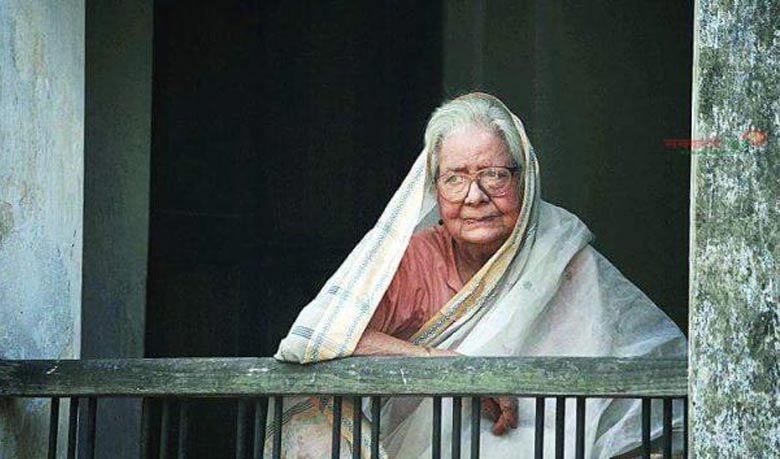
Nurjahan Begum
Nurjahan Begum, the editor and publisher of weekly magazine Begum, breathed her last at the age of 91 at the capital`s Square Hospital on Monday morning. She had been serving as the editor of the magazine for almost seven decades in the Indian subcontinent.
Born on June 4, 1925 in Chalitatali village of Chandpur district, Nurjahan, a veteran Bangladeshi female journalist, was the daughter of prominent journalist Mohammad Nasiruddin, the editor of the Bangla literary journal Saogat. Her father was also the founder of Begum Magazine. Nurjahan was awarded the Ekushey Padak in 2011.
Saogat, also called Saugat (presentation) was a leading Bengali literary journal and was first published from Kolkata in 1918. The weekly Begum was first published in Kolkata on July 20, 1947, when India was ready to attain freedom from the British colonial rule.
The first editor of the magazine was Begum Sufia Kamal, while the founder was Mohammad Nasiruddin. Subsequently, the journal was edited by his daughter Nurjahan Begum.
Nurjahan Begum`s father inspired her to join journalism. Her husband, Rokonuzzaman Khan, who she married initially against her father`s will, later became a renowned journalist himself.
At the time, many Hindu women were involved in the struggle for freedom, where Muslim women were kept behind doors but even then there were some Muslim women who were pioneering the feminist movement, like Begum Rokeya Sakhawat Hossain. Begum provided an outlet for women writers, mainly Muslim women, who had very little opportunity at the time.
The strict, conservative Muslim families of East Bengal then used to view Kolkata as a city which enticed women from religious path. So when Nasiruddin, who was then in Kolkata publishing Saogat on his own initiative, wanted to bring his wife and daughter to him, he faced strong opposition from his family. But Nasiruddin was adamant, especially after Nurjahan had met with drowning accidents twice in the village.
So in 1929, Nurjahan came to Kolkata with her mother Fatema Begum and an uncle. The sights and sounds of Kolkata dazzled Nurjahan and her father set his mission to modernise his daughter into a progressive-minded, confident woman who can fight against the deep-rooted misogyny of the society. Much to the sorrow of his wife, Nasiruddin first got rid of little Nurjahan’s large nose pin and long hair, which gave the child much relief.
She was introduced to Bangla alphabets by her mother and on the same day her father started teaching her the English and Arabic alphabets. But her exposure to the world of literature, cultural and social issues came from the gathering of stalwarts of that time, at Nasiruddin`s house and also Saogat office at 11 Wellesley Street, Kolkata. Nurjahan came in contact with literary giants, social reformists and educationist, including Kazi Nazrul Islam, Abul Mansur Ahmad, Kazi Motahar Hossain and Ibrahim Khan, who not only talked about politics but also about woman`s emancipation.
Upon Begum Rokeya Sakhawat Hossain`s request she was admitted to Sakhawat Memorial School at Baby Class. At school, Nurjahan grew up with the ideals of Begum Rokeya, the educationist and rights activist, who made it possible for Bangalee Muslim women to come out of the house and embrace the light of education. In 1942, she passed her matriculation from Sakhawat Memorial School. In 1944, she passed her intermediate examinations in philosophy, history and geography, and, in 1946, her Bachelors in ethics, philosophy and history from Lady Brabourne College.
Nurjahan`s childhood, adolescent and teen years were one with the activities of Saogat. Observing her interest in writings and newspaper works, Nasiruddin engaged his daughter to help him with filing, pasting and other general task at Shawgat.
There were large shelves containing columns of picture blocks. Little Nurjahan knew by heart the location of each and every block. She would rub and fetch the blocks as needed by her father. By the time, the first issue of Begum was published on July 20, 1947. Nurjahan was well acquainted with all the workings of a newspaper.
For the first four months, Nurjahan worked as the acting editor of the weekly magazine helping the editor poet Begum Sufia Kamal with collecting, editing and selecting writings for the issues.
Speaker Dr Shirin Sharmin Chaudhury said in a proper way that Nurjahan Begum was beacon of women awakening. She was also a pioneer of women in journalism. She worked for women`s emancipation against religious fanaticism, superstition and backwardness.
Nurjahan Begum had evolved into an institution through her almost seven decades of work. Begum magazine was not only widely read, it also showed women a path towards development. Her magazine also created awareness among the male members of the society. Nurjahan may have passed away but her contributions to society and women empowerment will persist for generations and she will live forever in our heart.
risingbd/Dhaka/May 25, 2016/Nowsher/Amirul
risingbd.com