Commerce Minister involved in market syndicate, claims opposition party
News Desk || risingbd.com
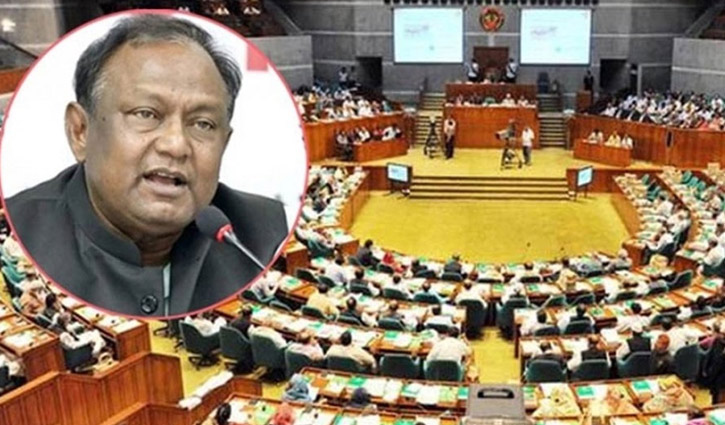
The opposition lawmakers have issued a scathing rebuke of Commerce Minister Tipu Munshi, going so far as to call for his resignation for failing to rein in the spiraling prices of essentials.
The minister came in for heavy criticism in parliament on Monday (June 26) during discussions on a motion to cut the commerce ministry’s budgetary allocation in the proposed spending plan for the upcoming fiscal year.
Labelling the commerce ministry as the ‘biggest failure’ in the current Awami League administration, Gono Forum lawmker Mukabbir Khan said, “It has failed so miserably that people are calling it a syndicate-friendly ministry.”
Mukabbir also blamed a ‘syndicate of traders’ for the volatility in the commodity market.
“Many in parliament have said the commerce minister is involved [with the syndicate]. But he doesn’t want to say it. After all this, why don't you [Munshi] resign?”
Meanwhile, Jatiya Party lawmaker Rustum Ali Faraji questioned the role of the ministry’s monitoring cell in controlling prices. “What does the monitoring cell do? Syndicates must be broken up. It is certainly possible to do so if they want.”
Although the prices of goods in the global market have been on a downward trend in recent months, its effects are yet to be felt in Bangladesh, according to Shameem Haider Patwary of the Jatiya Party.
Responding to the criticism, Munshi defended his ministry and said steps are being taken to cool commodity prices.
On the issue of syndicates, he claimed that several big groups were colluding to profiteer through price gouging. We have to be focused. We have jailed and fined many.
“But it was always going to be difficult for us to deal with such a sudden crisis. That’s why we trying [to regulate the market] within the rules through discussions.”
The motion to cut funding for the commerce ministry was ultimately defeated by a voice vote.
Addressing the inflated prices of daily goods, the minister said, “The prime minister has repeatedly said that the people are suffering and asked everyone to be frugal. But are we responsible for finding ourselves in this situation? The global crisis has affected us. We must take that into account.”
On the surge in onion prices, Munshi explained that the annual supply of the commodity was around 600,000-700,000 tonnes short of the demand. “Farmers will focus on production if the price is better. The deficit has been halved due to our initiatives.”
“The price should not be Tk 80-Tk 90 a kg. That's why we have arranged for imports on the prime minister's orders. We did not want to import onions as we wanted our farmers to get a fair price.”
“Imported onions from India cost Tk 40-45 a kg. The price of domestic onion is Tk 65.”
While acknowledging that the implementation of measures to regulate prices has been slow at times, Munshi maintained that the commerce ministry alone cannot fix the malaise in the commodity market.
“I’m still taking responsibility and we are trying our best to resolve the issue.”
Asad/AKA