Population explosion–a nightmare for Bangladesh to avoid
Manzurul Alam Mukul || risingbd.com
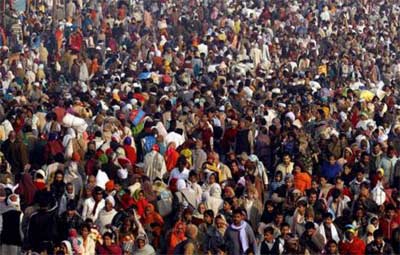
Population explosion
Monty Siddique from London
I once asked a domestic helper at my father-in-law’s residence in Dhaka how she was going to bring up so many of her children, on the basis of her seemingly meager earnings and her rickshaw-puller-husband’s minuscule income. She responded with a somewhat nervous smile. That expression summed it all!
I looked at my wife with raised eye brows. “Well, what answer would you expect from her?” my wife replied, as she, with her honours Social Science degree from Dhaka University, was in more familiar territory in understanding the domestic helper’s predicament.
I, on the other hand, with a more pragmatic mindset, get irritated with couples having excessively large families – especially when they are struggling to make ends meet.
Procreation is a natural process. What turns out to be a gigantean task is the good rearing of a child to produce a quality adult that can be part and parcel of a “civilised” society.
A “civilised” society is one in which individuals are “educated” to the extent that principles of democracy, human rights, respect towards all races and freedom of expression (as long as there are no double standards in judging the same) are ingrained in their psyche. Democratic institutions may take a couple of decades to be established if the intention is good.
But, democratic temperament only relies on nature of upbringing, which instils conscience and appreciation of justice, fairness, human values and self-control, to overcome extreme forms of jealousy, selfishness and anger. In the West, there are courses on “anger management”.
I remember when we took our daughter to an Independent (private) Schools’ Road Show in London, a very well spoken English scholar approached us and explained to our daughter that “education” should not be equated with acquiring qualifications but should reflect a sound upbringing. He was absolutely correct!
By now, the reader might be wondering whether I am digressing from the core issue, which is the impact of population explosion on society. However, I believe that unless we understand how crucial it is for society to be “civilised” in order to survive, we cannot fathom the danger, which lurks behind an uncontrolled population expansion without the resources to accommodate such inflation.
The private sector of Bangladesh has made important inroads into the professional business world. The Ready Made Garment (RMG) industry has catapulted the nation to the second position in the world – a truly brilliant achievement by any standards. The Pharmaceutical industry has developed into a world class manufacturing sector for export to many nations. The Shipbuilding industry is gradually making its presence felt.
All of the above, in addition to remittances from abroad, are huge foreign exchange earners. Remittances from the exported labour force and export income from the RMG industry have played a pivotal role in keeping the Bangladesh economy buoyant, notwithstanding the credit crunch and economic downturn that have plagued the world economy in recent years.
According to published sources, over four million Bangladeshi workers are tied to the RMG industry and more than five million Bangladeshis are working abroad. It is acknowledged that these are estimated figures. Given that there are dependents associated with these wage earners; one can surmise that a sizeable population of Bangladesh is sustained by this financial sector. But for how long can Bangladesh bank on this sector?
For how long can Bangladesh continue to export her labour force? Will Bangladesh be able to remain a major exporter of garments for the foreseeable future? How will the increasing population and shrinking landmass be managed in the absence of commensurate development of infrastructures and resources? Well, these are thought provoking questions which need to be addressed.
Recent local government elections in the United Kingdom and the European Parliamentary elections show a massive swing to the proponents of stringent curtailment of immigration. Many on talk-shows are openly averse to immigration. There is an overt fear of dilution of culture from divergent immigrant communities. There is a perception amongst some analysts that islamophobia may be spreading.
A reputable British newspaper, “The Guardian”, recently published the findings of a “British Survey Attitudes” which show that an increasing percentage of people in the UK identify themselves to be prejudiced towards other races. This is a very alarming development in 21st century modern Britain.
In the West, people are living longer, which, obviously, has a draining effect on the free healthcare, such as provided by the National Health Service (NHS) in the UK. Salary freeze in the UK public sector for a number of years, in the recent past, has kept job-salaries suppressed for fresh graduates vis-a-vis those in the private sector. And with the escalating utility costs, the chances for many young professionals of getting on the property ladder are becoming scarce.
To add to the misery, an influx of migrant workers from other parts of the European Union into the UK has undercut a large contingent of the labour market in the UK, though there are, now, promising signs that an economic recovery is in the offing.
The above factors have generated, unjustifiably, a negative perception towards the immigrant population, thereby moulding the behaviour of the electorate to vote for a clamp down on immigration. Admittedly, there have been anecdotal evidences which paint a derogatory image for some immigrants and which have been blown out of proportion.
Against this backdrop, the chances of export of Bangladeshi labour force to the European Union will, probably, be virtually non-existent. In fact, many Bangladeshi expatriates may be contemplating on relocating to another country or reluctantly drifting back to their country of origin as a last resort. A proliferation in the purchase of flats in Bangladesh by non-resident Bangladeshis is a strong indicator of such an intention.
It is fair to comment at this juncture that a substantial percentage of the work force of the NHS (reputedly the best healthcare institution in the world) constitute immigrants, without whom the NHS will, undoubtedly, become dysfunctional. Many service industries are totally reliant on the immigrant labour force which is willing to work on lower salaries. The British Bangladeshi restaurant trade is a multi billion pound industry showcasing a financial success story for Britain.
So, where will Bangladesh export its workforce?
Affluent Canada (population circa 35 million including about 7 million immigrants) and Australia (population over 23 million including 6 million born overseas) have tiny populations compared to their huge and relatively unexploited land masses. Nevertheless, they are highly unlikely to offer an open door policy towards immigration for fear of being overtaken by immigrants of an alien culture.
Canada, Australia (albeit a huge landmass thereof being in the form of desert or semi-desert), New Zealand and the United States of America will, perhaps, still be ready to absorb, selectively, only skilled labour from developing countries, such as Bangladesh.
Published demographic data of the USA indicates that “whites” (has seemingly a wider coverage in the US Census Bureau) constitute an overwhelming majority of the population. The figures for “whites” vary from mid sixty to mid seventy percent. Considering that the population of the USA, according to 2012 statistics, hovers around at least 315 million, a few million (say 5 to 20 million) immigrants from developing countries are hardly going to make a dent on the ethnic distribution. So, hopefully, there is some light at the end of the tunnel for prospective immigrants to the USA for pastures anew.
I have adopted a simplistic approach. Clearly, other factors, such as procreation rate within an ethnic group, marriage between different ethnic groups, come into play to determine the distribution pattern of different ethnic groups. Brazil is a stark example of a highly diverse ethnic mix.
For now, other economies – Middle Eastern, middle income or emerging – may have a job market for the Bangladeshi labour force. But for how long are they likely to provide a haven for migrant Bangladeshi job-seekers?
Because of unyielding competition and market saturation, it would also be wise for Bangladesh to realise that the RMG industry could not remain her golden goose indefinitely.
What it all boils down to is that – like it or not – Bangladesh cannot sustain an uncontrolled population expansion. This is because she cannot expect to continually export her labour force as well as maintain a dominant position in the world’s RMG market in the light of the recurrently fluctuating ambient conditions.
The going has been good for Bangladesh for the last ten years. So, Bangladesh should have utilised the bubble created by the mounting foreign exchange to construct all the necessary infrastructures for a civilised society to flourish. There is still time for her to act on it. Otherwise, a runaway population expansion will lead to a Malthusian nightmare and a catastrophe.
According to the 2010 World Bank figures, about 31% of the population in Bangladesh were facing poverty.
The asymmetric distribution of wealth has produced, at one end of the spectrum, a tiny upper class of people, who are exceptionally rich, and, at the other end, a sizeable underclass, which is poverty stricken. And in between, there is a varying distribution of income classes – including a sprawling middle class – at different rungs of the economic ladder. All this inequitable wealth distribution causes intense social and financial tensions, which are amplified in consequence of accelerated population growth.
Ironically, it is the underprivileged classes, working frantically and shedding sweat and tears, which keep Bangladesh afloat. They comprise the RMG workers, other factory workers, rickshaw pullers, transport workers, domestic helpers, farmers, etc. Many of them – except the farmers – live together with other such workers four, five or six to a room, in large cities, such as Dhaka and Chittagong, and send their savings to their families in the villages. They cannot dream of running their family household, on their own, under the same roof in the cities, as the cost of rent and utilities are unaffordable.
It is always the population that occupies the lower rungs of the wealth distribution ladder that is more prone to uncontrolled procreation, as I have observed. They are also more susceptible to social degeneration as they can ill afford the essential amenities for a quality human development. What is even more shocking is when sections of the upper echelons in any society display sheer arrogance and total disregard to human values and commit terrible crimes. That is, of course, another story for another day.
Bangladeshi civil society should ponder for at least ten minutes, whilst lying in bed at night just before falling asleep, the effects of a population explosion on the future of the country, in twenty to thirty years time. I am sure the deep thinkers amongst them will be greatly concerned.
Can we really afford to be complacent and allow ourselves to sleep walk into a disaster?
This article is written by Monty Siddique BSc (Hons) in Industrial Chemistry from UK University, who took early retirement from the United Kingdom Civil Service, after having served as a Senior Patent Examiner (above Principal Level) in the United Kingdom Intellectual Property Office, which is the operating name of the United Kingdom Patent Office. He has also trained and managed UK patent examiners.
Risingbd/July 12, 2104/mukul
risingbd.com