Unite multi–and Trans–disciplinary stakeholders to combat against Zoonoses
Professor Md. Ahasanul Hoque (Rukan) || risingbd.com
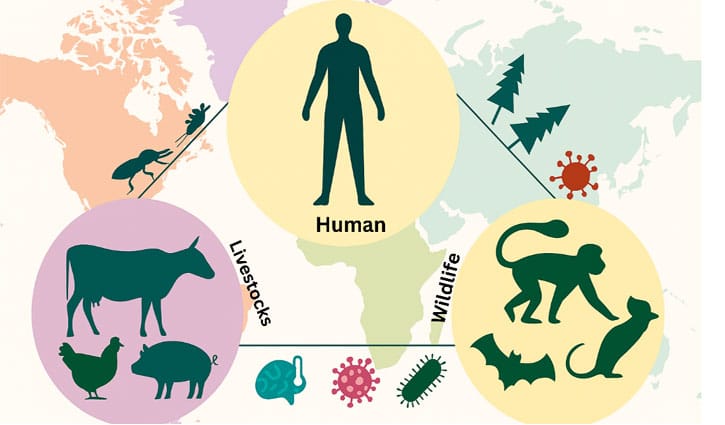
In an increasingly interconnected world, the boundaries between humans, animals, and ecosystems are progressively growing ever more porous. This interconnectedness, while essential to our shared survival, also presents unique challenges-especially in the realm of emerging and reemerging infectious diseases. Among these, zoonoses-diseases transmitted from animals to humans-remain at the forefront of global health concern.
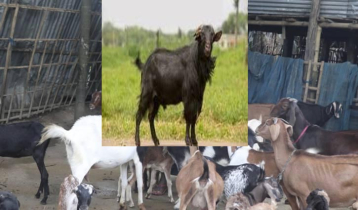
From rabies to brucellosis, Nipah to avian influenza, zoonoses account for over 60% of all known infectious diseases in humans and an even greater percentage of emerging threats. These diseases often originate at common and complex interfaces-where people, animals, and the environment converge. Live animal markets, pastoral communities, intensive farming systems, abattoir and urban wildlife interactions all represent critical points where spillover as well as spill-back can occur.
While zoonosis is well-known, the reverse phenomenon-reverse zoonosis, or anthroponosis-is gaining increasing relevance. This involves the transmission of pathogens from humans back to animals, posing grave threats not only to animal health and conservation, but also to disease ecology and microbes’ evolution. The COVID-19 pandemic underscored how reverse zoonosis can reshape public health risk landscapes, with confirmed cases in domestic pets, zoo animals, and farmed animal species in different parts of the world.
For those working at the front lines-veterinarians, livestock professionals, butchers, researchers, wildlife conservationists-the occupational risk of zoonotic disease is especially high. Direct contact with animals, animal products, or contaminated environments puts them at heightened vulnerability. Mitigating these risks requires more than protective gear-it demands awareness, training, knowledge, skills, monitoring, surveillance, and a culture of biosecurity through One Health approach.
In this complex web of interdependence, One Health emerges not just as a concept, but as a strategic imperative. At the One Health Institute (OHI) of Chattogram Veterinary and Animal Sciences University (CVASU) in Bangladesh, we are committed to strengthening this approach through cutting-edge research, cross-sectoral collaboration, and community-focused multi-disciplinary and trans-disciplinary education. Whether it’s through nationwide webinars, scientific outreach, or student engagement, our mission is to build a workforce equipped to think and act across disciplines.
The OHI also plays a pivotal role in addressing challenges at the interface-by informing policy, supporting monitoring and surveillance networks, and facilitating early-warning systems. We envision a future where veterinarians, physicians, public health experts, environmental scientists, social science scientists, anthropologists, communication experts, community health workers, local government representatives and policymakers no longer work in silos, but in synergy-because diseases do not recognize boundaries, and neither should our solutions.
As we navigate the age of pandemics and planetary health threats, the message is clear: protecting human health is inseparable from protecting animal health and the ecosystems we all share.
The writer is from Department of Medicine and Surgery, Faculty of Veterinary Medicine Director, One Health Institute, Chattogram Veterinary and Animal Sciences University
Dhaka/AI