Bangladesh eyeing on halal export market
Imtiaz Ahmed || risingbd.com
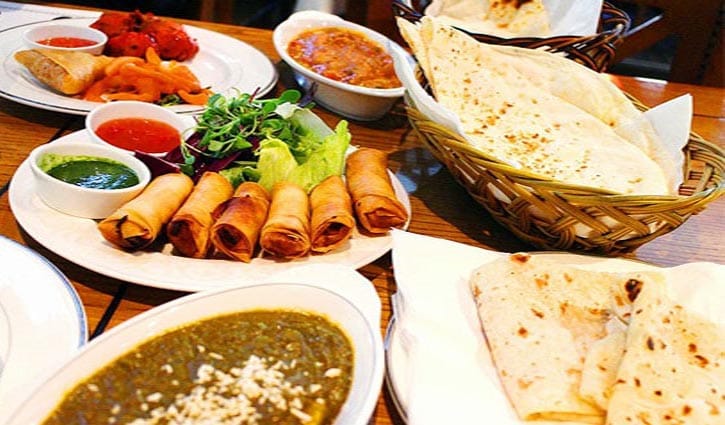
Bangladesh has started working meticulously in maintaining international standard on "Halal products" with a view to maintaining and exploring the halal markers in the middle-east and some South-east Asian markets, sources said.
Some 10 million expat Bangladeshis are living in Gulf countries—Saudi Arabia, UAE, Qatar, Oman, Kuwait- and in some southeast Asian countries—Malaysia and Singapore are the prospect consumers of Bangladeshi Halal products.
Countries like Thailand, Malaysia, Indonesia, Singapore and India have major success in the international Halal markets, said business leaders of Bangladesh.
According to available data, the global halal market, encompassing products and services compliant with Islamic Sharia law, has emerged as a powerhouse in the world economy, valued at USD 7.7 trillion in 2025 and projected to reach USD 10 trillion by 2030. Driven by a growing Muslim population, rising disposable incomes, and increasing demand for ethical and sustainable products, the halal industry spans food, beverages, pharmaceuticals, cosmetics, and tourism.
India, despite being a non-Muslim-majority country, plays a significant role as one of the world’s leading exporters of halal products, particularly in the food sector.
The halal market caters to over 1.9 billion Muslims worldwide, representing 25% of the global population, and is expected to grow to 2.76 billion by 2050. The halal food and beverage sector dominates, valued at USD 2.71 trillion in 2024 and projected to reach USD 4,569.69 billion by 2030 at a compound annual growth rate (CAGR) of 9.56%. Beyond food, the market includes pharmaceuticals (USD 132 billion by 2022), cosmetics, and tourism, with Muslim travel spending forecasted to hit USD 283 billion by 2022. The industry’s appeal extends to non-Muslims, who value halal products for their stringent hygiene, ethical sourcing, and sustainability standards.
Key drivers of growth include the rising Muslim middle class, particularly in Southeast Asia and the Middle East, with consumer spending on halal food reaching USD 1.38 trillion in 2024. Technological advancements, such as block chain for supply chain transparency and e-commerce platforms, have boosted accessibility, with online halal sales growing at 15% annually. Sustainability trends, aligning with halal principles of ethical production, further enhance the market’s global reach.
Muslim-majority countries like Malaysia, Indonesia, and Saudi Arabia lead in consumption and certification, but non-Muslim-majority countries, including India, Brazil, and Australia, dominate as exporters. India, in particular, has carved a niche as a major supplier of halal meat and agricultural products, leveraging its vast livestock resources and strategic trade policies to meet global demand.
Against this backdrop, the government has stepped in to tap the prospective market in the middle-east and Southeast Asian markers, said a commerce ministry official.
Meanwhile, sources said that some importing countries have asked Bangladesh government to ensure Halal process in total process ranging from production to export of the products.
At the invitation of the Islamic Foundation of Bangladesh, a delegation of three members of the Saudi Accreditation Centre (SAAC)---Emad Osama H Owaidah, Accreditation Manager of Saudi Accreditation Centre (SAAC), Mohammed Abdullah M Al Arifi, Technical Assessor of Saudi Accreditation Centre (SAAC) and Rakan Al Kahlifa, Islamic Affairs Expert of SAAC--visited Bangladesh during July 9-12, 2025 to assess the facilities regarding giving authority to Islamic Foundation by the SAAC Systematic Industrial Contractor (SMIC), a 100 per cent Saudi owned company, was found in 2012 in Dammam, Saudi Arabia. The SMIC is leading inspection, certification, verification and testing company, recognized for quality and safety as an independent third party inspection company in Saudi Arabia.
Saudi Food and Drug Authority (SFDA) is an independent body for the Kingdom of Saudi Arabia that aims to ensure food and drug safety for the nation.
The Saudi delegation visited Bangladesh, held meeting with the Ministries of Religious Affairs, Foreign Affairs, Food and Fisheries and Livestock and Bangladesh Food Safety Authority, Bangladeshi exporters require certificates of Systematic Industrial Contractor (SMIC) of KSA, Saudi Food and Drug Authority (SFDA) and Department of Islamic Development Malaysia, also known as JAKIM, to enter the Halal markets of both Saudi Arabia and Malaysia, said a commerce ministry official.
Systematic Industrial Contractor (SMIC), a 100 per cent Saudi owned company, was found in 2012 in Dammam, Saudi Arabia. The SMIC is leading inspection, certification, verification and testing company, recognized for quality and safety as an independent third party inspection company in Saudi Arabia.
Meanwhile, Bangladesh should focus on strategic planning, quality production, and effective marketing to tap the potential for grabbing the huge global market of Halal-certified products, which is estimated at $3.3 trillion, said a businessman.
All stakeholders to the production and marketing of such products should work in coordination to boost the country's export earnings, he added.
Meanwhile, over several million Bangladeshis live in Gulf and Southeast Asian countries who are main consumers of the Halal products, produced and exported by the Bangladeshi businessmen and exporters Pran Exports Ltd (PEL), a subsidiary of Pran-RFL group, exports products to some middle-east countries and some Southeast Asian countries.
However, the KSA has asked Bangladesh to set up a standard in total process that Bangladesh will have to maintain to retain and expand the market.
Officials from Bangladesh and Malaysia have expressed their determination to work together to expand the market for "Halal products" and develop the "Halal ecosystem".
They came up with the interest at a meeting of the Islamic Foundation's Halal Certification Department with the delegation of Serunai Malaysia and the Islamic Development Bank at the foundation's head office in Dhaka on December 12, 2024.
The foundation's Director General Md Saiful Islam inaugurated the meeting, which discussed various aspects of the "Reverse Linkage Project" between Bangladesh and Malaysia for the development of the "Diagnostic Mission Halal Ecosystem".
The speakers said that the project will enrich the existing Halal ecosystem in Bangladesh and expand the Halal market by identifying opportunities for cooperation through the exchange of relevant knowledge, technology and expertise from Malaysia and Bangladesh, exploring potential trade and investment between the two countries.
Meanwhile, speakers said that the two countries also believed that this project would play an important role in enhancing the efficiency of the Islamic Foundation in issuing Halal certificates.
They opined that the reverse linkage project will also be able to play an important role in accelerating the development of the Halal ecosystem through interconnection between countries.
India is one of the world’s largest exporters of halal meat, particularly buffalo meat (often referred to as “carabeef”), which constitutes over 50% of its meat export market. In 2024, India’s halal meat exports were valued at approximately USD 3.2 billion, making it a key supplier to Muslim-majority countries in the Middle East, Southeast Asia, and North Africa. The country’s agricultural exports, including rice, spices, and processed foods, also increasingly carry halal certification to tap into this lucrative market.
India’s halal exports are facilitated by its robust livestock sector, with over 535 million livestock, including the world’s largest buffalo population. The country’s meat industry, centered in states like Uttar Pradesh, Maharashtra, and Andhra Pradesh, has invested heavily in halal-compliant slaughterhouses and processing facilities. Companies like Allanasons Pvt. Ltd., Al Kabeer Exports, and Hind Agro Industries lead the sector, exporting to over 70 countries, including Saudi Arabia, UAE, and Malaysia.
The Indian government supports this growth through policies like the India Conformity Assessment Scheme (I-CAS) – Halal, updated in 2024 to streamline certification for exports to Organization of Islamic Cooperation (OIC) countries. The Agricultural and Processed Food Products Export Development Authority (APEDA) plays a pivotal role, ensuring compliance with international halal standards and facilitating trade agreements. In 2024, India signed export deals with Saudi Arabia and Indonesia, boosting halal meat and rice shipments by 12% compared to the previous year.
According to newspapers, Pakistan is pursuing a major halal meat export agreement with Malaysia, aiming to tap into the multi-billion-dollar global halal market as part of a wider push to diversify its export base and strengthen economic ties with Southeast Asia.
Pakistan Minister for National Food Security and Research Rana Tanveer Hussain announced on Monday that talks with Malaysia are underway and, if successful, could generate up to $200 million in halal meat exports over the next five years.
“Such a partnership would not only boost bilateral trade but position Pakistan as a key player in the international halal economy,” Hussain said during a meeting on export strategy.
The initiative comes amid growing interest from both nations to deepen cooperation in agriculture, energy, IT, and trade.
Malaysia is currently Pakistan’s third-largest trading partner in South Asia, and both countries are looking to build on that relationship following recent diplomatic exchanges.
The halal food market, valued at more than $2.7 trillion globally, is expanding rapidly across Asia and the Middle East.
While Pakistan is one of the top producers of halal meat, its export volume remains modest.
Officials believe increased access to Malaysia and other ASEAN markets could significantly boost the sector.
The Pakistan-Malaysia Business Council and its Malaysian counterpart are expected to sign a memorandum of understanding to support halal trade initiatives.
Pakistan government advisors on commerce and industry also voiced support for expanding exports beyond traditional sectors.
The writer is a senior journalist.
Dhaka/Mukul