Climate change erodes Kuakata’s coastal green belt, threatening biodiversity
Easmin Akter || risingbd.com
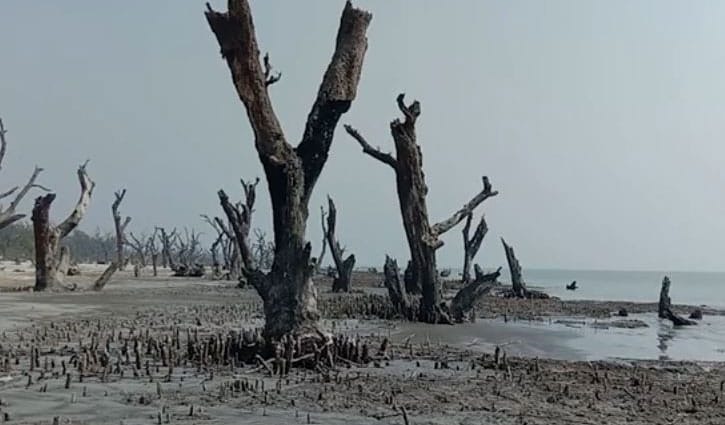
Green belt disappearing due to climate change.
Climate change and recurring natural disasters have devastated the coastal green belt of Kuakata, a once-thriving tourist destination in southern Bangladesh, sparking concern among residents and environmentalists over escalating erosion, biodiversity loss, and weakened disaster resilience.
The 18-kilometre beach, stretching across Gangamati, Lemburbon, and Jhaubon, has seen rapid transformation in recent years. Rising sea levels, increased salinity, and cyclones—most notably Sidr, Aila, and Mahasen—have contributed to the gradual collapse of the area’s vegetation and protective sand dunes.
‘We’ve never seen the sea come this close’
‘The sea used to be at least a kilometre away. Now, the waves crash right near our homes,’ said Mohammad Jalal, a 62-year-old fisherman in Gangamati. ‘We’ve lost coconut trees, keora trees—our natural shield is gone.’
Many locals point to the changing environment as a direct threat to their way of life. ‘In my childhood, there were thick green forests along the beach,’ said 45-year-old Rehana Khatun, who sells snacks to tourists. ‘Now, it’s bare and broken. During storms, the wind feels stronger, and we have nowhere to take shelter.’
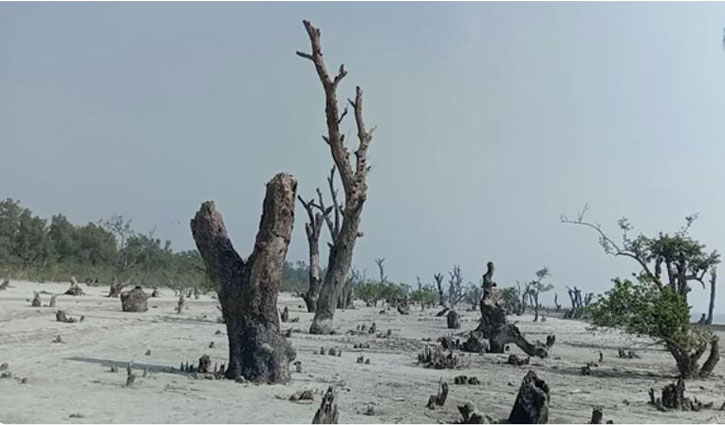 Trees collapsing due to land erosion caused by sea and river waves.
Others are worried about the long-term impact on livelihoods. ‘The shade from the trees used to attract visitors,’ said Mamun Hossain, a hotel manager in Kuakata town. ‘Now, people are taking photos with fallen trees, but that novelty won’t last. If this continues, tourism will collapse.’
Mangrove legacy under threat
According to the Forest Department, mangrove plantations were introduced in the 1960s outside flood control embankments along Kuakata’s shoreline. About 1,100 acres were covered with mangrove species including gewa, keora, and chaila.
However, the department’s latest estimates suggest that nearly 20,000 such trees in Kuakata and Gangamati are now critically endangered due to erosion and saline intrusion.
‘Even the birds are disappearing’
The loss of native vegetation has had knock-on effects on wildlife. ‘We used to wake up to the sounds of birds. Now, even they have fled,’ said Amina Begum, a 53-year-old resident who collects firewood from nearby areas. ‘There are fewer crabs and fish, too.’
The environmental degradation has made it difficult for local farmers and gatherers as well. ‘The soil has turned salty. We can't even grow vegetables anymore,’ said Abul Kalam, a 38-year-old seasonal farmer. ‘The roots of many trees rot in stagnant water, and nothing survives long.’
Calls for urgent restoration
Environmentalists warn that the region’s erosion crisis reflects broader climate vulnerabilities. ‘The collapse of Kuakata’s green belt is a sign of what’s coming for other coastal regions,’ said Kazi Amdadul Hoque, a climate specialist and head of climate action at friendship. ‘Without urgent afforestation and managed retreat strategies, these communities will face more displacement.’
Local officials say they are aware of the damage and are preparing a response.
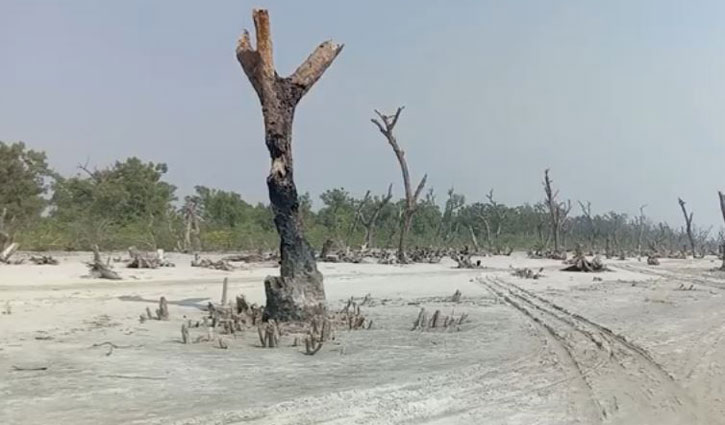 Tree trunks have collapsed as powerful waves have excessively eroded the sand layer on the beach.
‘We are launching a coastal restoration programme, starting with the removal of dead trees and planting of salt-resistant species,’ said Kalapara Upazila Nirbahi Officer (UNO). ‘We also plan to engage the community in long-term conservation efforts.’
Environmental advocates are calling for stronger government action and international support for adaptation measures, including protective infrastructure, ecosystem rehabilitation, and early-warning systems.
‘This isn’t just about saving trees,’ Hoque said.‘It’s about protecting people, culture, and an entire coastline from vanishing.’
Dhaka/AI