Bangladesh`s trade potentials with 7 Sisters bright: Rakesh
SANTOSH MONDOL || risingbd.com
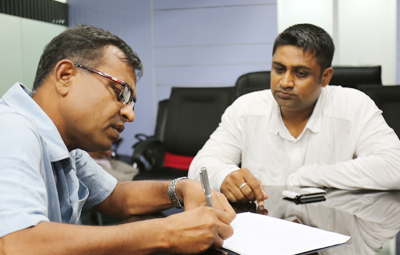
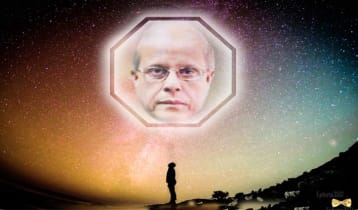
Santosh Mondol takes interview of Rakesh Mazumder
Though the goods from Bangladesh are getting popularity in seven northern states of India, popularly known as `Seven Sisters` gradually, the trade between Bangladesh and those states is not reaching at desirable level due to lack of infrastructure.
Besides, businessmen of both Bangladesh and India are affected due to lack of improvement in ties with Assam`s capital Guwahati, which is known as a `gateway` to the Seven Sister states. As a result, both sides are deprived of availing the potentials of trade and commerce.
These were stated by Rakesh Mazumder, City Member of Assam Chamber of Commerce and Industry and a noted businessman of Guwahati.
During his recent visit to Dhaka, risingbd`s Santosh Mondol interviewed Rakesh Mazumder, which has been given below:
risingbd: You have a reputation as an importer of Bangladeshi goods. What kind of products do you generally import from here?
Rakesh: India`s seven northern states now import many kinds of good from Bangladesh. These include food and beverage, and garment. Besides, plastic goods, melamine, cement, rod, ceramic, cosmetics, mosquitoes, flash doors etc are imported from Bangladesh.
risingbd: What kinds of products are imported by Bangladesh from the states like Assam, Meghalaya and Tripura?
Rakesh: We are exporting all kinds of agricultural products to Bangladesh. These include ginger, onion and betel-nut. Besides, coal and stone occupy the topmost positions in our export list. Though stones are abundant in these states, Tripura is also importing stones from Bangladesh.
risingbd: Would you please explain it clearly for our readers?
Rakesh: India`s Assam and Meghalaya states are close to the northern part of Bangladesh. These stones are accumulated in Sunamganj and Sunamganj districts of Bangladesh. From there you can reach Tripura by road crossing only 150-200 kilometers. But, if you want to go to Tripura from Assam or Meghalaya, you will have to cross as many as 1,000 kilometers. Because of this, the importers of Tripura are interested to import stones from Bangladesh. It helps them to save both time and money.
risingbd: What are the major obstacles to do business with Bangladesh?
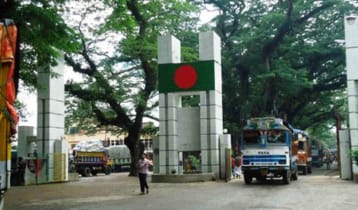
Rakesh: The major obstacle is communication system. Though the work of road and rail networks from Guwahati to Golokganj of Assam or Sonaghat land port in Kurigram of Bangladesh have already been completed, the work of road and rail networks in Bangladesh side are yet to be completed.
Besides, the work of 275 km roads from Nakugaon in Sherpur and Dalu border in India to Guwahati is completed. But, there is no initiative to build only several kilometer roads in the Bangladesh side. As a result, importers and exporters of the two countries cannot avail the opportunities though there are huge potentials of trade.
Two other important landports are Roumari in Kurigram and Mankachar landport in India. These two landports have virtually remained under-utilised due to the same reasons.
risingbd: Are you facing any other problems?
Rakesh: Yes, there are many other problems. It may be mentioned about immigration problems. Though there are 10 land ports between Bangladesh and India, visa is processed at Kolkata and Shiliguri of West Bengal and Agartala in Tripura. As a result, people of Assam and Meghalaya are required to go to Kolkata or Agartala for visas crossing a thousand kilometer. It is really a major problem to expand trade between the two countries. So, I request the Bangladesh government to open a Visa Processing Centre at Guwahati.
risingbd: What further initiatives do you think need to be taken to expand trade between the two countries?
Rakesh: Bangladesh has a very close relations with West Bengal, Assam, Meghalaya and Tripura in terms of language, culture and history. So, it has become imperative to introduce road communications between Guwahati and Dhaka like between Dhaka and Kolkata or Dhaka and Agartala. It may be introduced at least for twice a week on experimental basis.
Besides, trade fairs take place in both the countries every year. But, many things remain absent at these fairs. After selling and buying at these fairs, people go back to their respective places. Temporary transactions between retailers and businessmen take place at these fairs temporarily, but long-term relation don`t take place. Moreover, opinion-sharing between the organisers and major importers or exporters don`t take place at these fairs. If these limitations can be overcome, I personally think that there is a very bright future awaiting for trade and commerce between the two countries.
risingbd: Thank you for giving time to risingbd.
Rakesh: Very warm wishes for the people of Bangladesh and risingbd from me.
risingbd/sza/Sept 17, 2013
risingbd.com