Ways to become a lawyer
Abdullah Al Mamun || risingbd.com
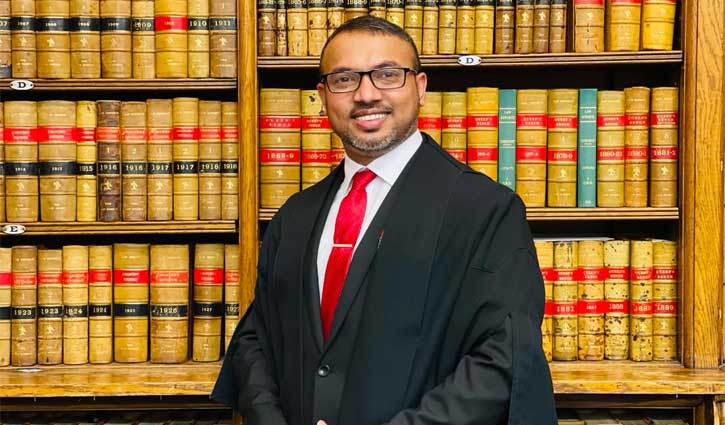
Abdullah Al Mamun
There are some specific conditions and certain rules to become a lawyer. The processes are described below.
Becoming a Lawyer
In the aspects of UK and Bangladesh Jurisdictions, what are the requirements or qualifications for one to become a Practising Lawyer?
If one would like to become a lawyer in the UK, he/she may consider that there are a few types of separate Authority who directly authorising the lawyer on a day-to-day basis.
- Solicitor Regulatory Authority
- Bar Standard Board
- CILEX Regulation – Chartered Institute of Legal Executives
- Licensed Conveyancers – Council of Licensed Conveyancers
- Patent and Trade Mark Attorneys – Regulated by Intellectual Property Regulation Board
- Costs Lawyers – Regulated by the Costs Lawyer Standards Boards (CLSB)
- Notaries – Regulated by the Master of the Faculties
Overview
I would like to draw a brief overview on how to become a Solicitor and a Barrister in the UK and, how to become an Advocate in Bangladesh.
To become a Solicitor:
Complete Law Graduation or Non-Law Graduation with Graduate Diploma in Law (GDL) and Post-Graduation, Diploma in Legal Practice Course (LPC), and;
a) The student should apply for two years period of recognised Training Contract before they start their LPC. Sometimes the training provides tuition fees towards student’s academic year as a part of agreement of the training contract. The full time recognised training contract is set for 24 months or 18 months with 6 months of exemption, if the student had previous work experience.
b) A student could be offered for a part-time period of recognised training contract.
c) Period of recognised training – a student works within the practise under supervision of the Principal Solicitor and firm/practise is regulated and authorised by the Solicitor Regulatory Authority in order to practice in England Wales.
d) Once you are a qualified Solicitor, you work – in-house, in private practice, as a sole practitioner, as solicitor advocate, in the judiciary.
In autumn 2021, Solicitor Qualifying Exam (SQE) is being introduced as a new route to qualify as Solicitor in England and Wales; SQE which has been designed as two stages of assessments – SQE1 (on Legal Knowledge) and SQE2 (on Practical Legal Skills and Knowledge).
There is a 10-year transitional period until 2031, when the LPC (Legal Practice Course) will be fully replaced by SQE route to become a Solicitor.
Under the New Route to qualify as a Solicitor – Students will have to pass the both SQE1 and SQE2. The student must pass SQE1 before they sit for the SQE2.
Along with passing SQE assessments, the candidates must complete their Degree level qualification (Degree could be in any subject), Complete two years of Qualifying Work Experience (QWE) under Supervision and satisfy the Solicitor Regulatory Authority’s character and suitability requirements. QWE can be done at a maximum of four separate employers, including firms, legal clinics academic institutions or other appropriate organisations.
To Become a Barrister
Three Components to training to become a Barrister:
1. Academic Components – Law Graduates or Non-Law Graduates with Law
Conversion Course, Graduate Diploma in Law (GDL)
2. Vocational Training – Bar Training Course (BTC)
3. Pupillage or work based training – In order to Practise as a Barrister, pupils must undergo work-based practical and training, usually of six months non-practising period and six months practising under the supervision of practicing Barrister.
Certain individuals, like for example, a qualified solicitor, academics or foreign lawyers may wish to become a Barrister in England and Wales by applying through Bar Transfer Test (BTT). Those who wants to apply for BTT, they may get exempted from all or some of the requirements, depending upon their circumstances.
To Become an Advocate in Bangladesh:
1. Complete Law Graduation (LLB Degree or LLB Hon’s)
2. The Pupil must undergo a period of six month training/internship under the supervision of a Senior Advocate of Bangladesh who is having 10 years of experience.
3. After completing 6 months training/internship, the pupil will be eligible to sit their Bar Exams to be enrol as an Advocate in Bangladesh.
4. Bar Enrolment exam consists three stages:
(a) MCQ;
(b) Written; and
(c) Viva under Supervision of the Enrolment Committee.
If the pupil satisfies the Enrolment Committee by passing all of the above, he/she may be granted a Certificate of Enrolment by the Bar Council to practice as an Advocate in the subordinate Court in Bangladesh.
With a 2 year of practising experience, an Advocate becomes eligible to gain right of audience to appear and represent before the High Court Division of the Supreme Court in Bangladesh.
Anyone other Than A Lawyer Be Admitted On The Roll To Appear And Represent Before The Court In Bangladesh:
If someone had a 10 year of experience in holding Judicial Office, he/she might otherwise be qualified and be admitted directly to Practise before the High Court without sitting any Bar Exams. He/she is not required to be enrolled as an Advocate to the Local Bar Association. The Bar Council will issue him/her a Certificate followed by an interview by the Board subject to condition that he/she will not be eligible to practise before any subordinate court in Bangladesh.
Foreign Lawyer In Bangladesh:
Requirements For A Foreign Lawyer To Be Admitted On The Roll To Appear And Represent Before The Court In Bangladesh:
A foreign lawyer may be directly admitted to practise before the High Court in Bangladesh without sitting an exam. Under the current Scheme of the Law, Bangladesh Legal Practitioners and Bar Council Orders, 1972 (as Amended up to October 2013, the applicant must be a law graduate and he/she must be an enrolled lawyer or practitioner in a foreign jurisdiction.
Abdullah Al Mamun, the writer, is a Solicitor. He is specialized in immigration law, human rights, asylum, EU law, family law, and welfare benefits.
Solicitor Abdullah Al Mamun